Paper books or an app: what transfer notes really cost a five-vehicle firm
What carbon-copy transfer note books really cost a five-vehicle firm once driver and office time are counted, against an app, and when paper is still the right choice.

LoadSnap team
Running a waste business
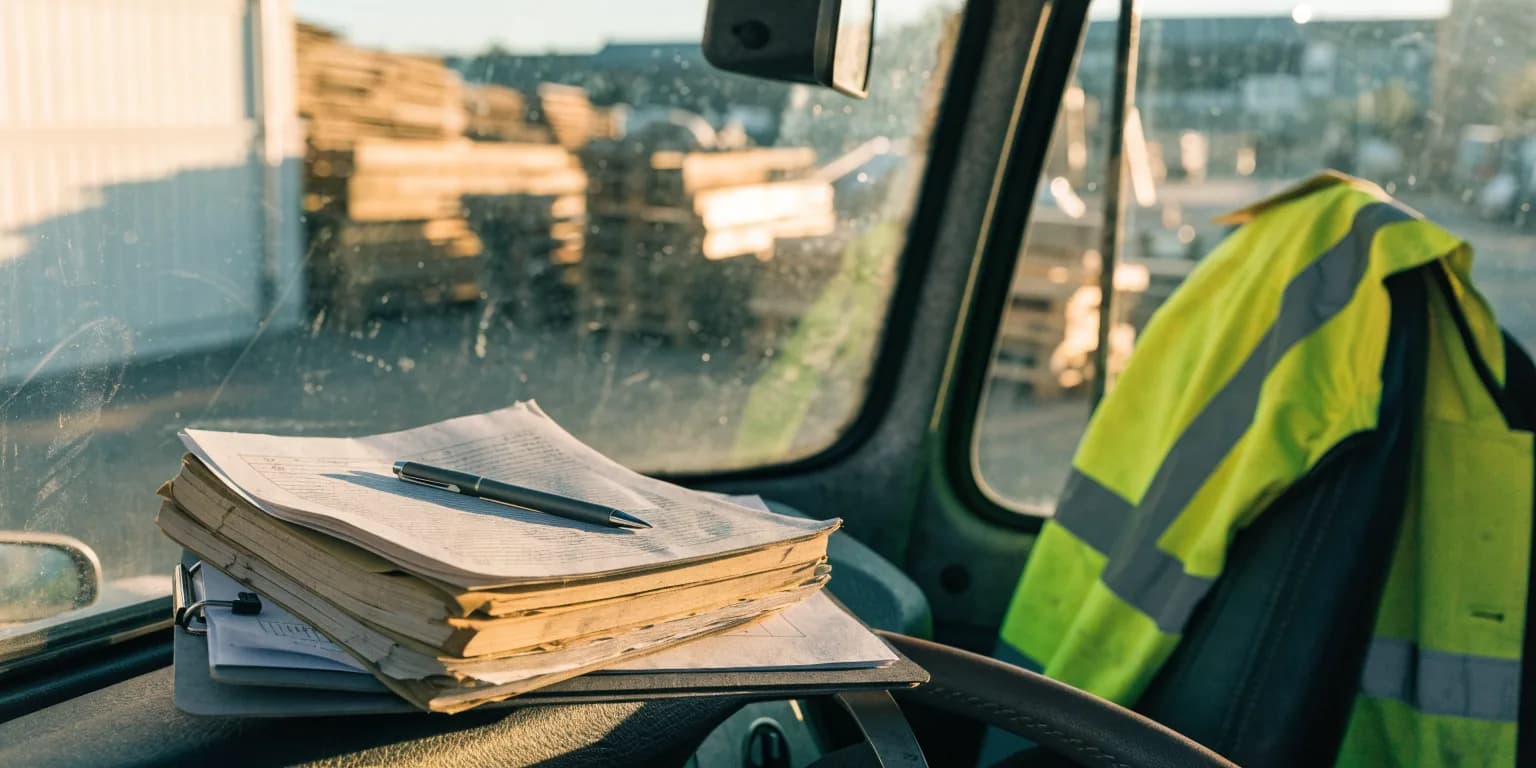
A book of transfer notes costs a few pounds, so paper looks free. It is not, once you count the time spent writing them, collecting them from cabs, filing them and hunting for one when someone asks. We costed both for a made-up firm with five vehicles doing 40 jobs a day between them. The app came out cheaper, but not by as much as you might think, and not for every firm.
The firm
Brookside Skips (made up) runs five skip loaders and hooklifts and does 40 jobs a day between them, with one person in the office. Every number below is an assumption, listed so you can swap in your own.
- Jobs
- 40 a day, 250 working days, so 10,000 transfer notes a year
- Driver cost
- £18 an hour, wages plus employer's costs
- Office cost
- £15 an hour
- Note lookups
- 25 a year: customers wanting a copy, tip queries, the odd regulator request
What a book costs, and what it really costs
The books are cheap. One printer sells two-part books of 100 notes for £13.35 plus VAT. Another supplier sells 50-note books for £15.99 (A5) and £18.99 (A4). Prices checked 4 October 2026. For 10,000 notes a year that is about £1,335 at the cheaper price and up to £3,800 at the dearer one. We used the cheaper one.
The time is not cheap. Our assumptions:
- Driver, 3 minutes a note. Writing the customer's name and address, the waste description and code, the SIC code, the carrier number, and getting a signature, by hand, in the cab or on the bonnet.
- Office, 2 minutes a note. Collecting books from cabs, checking each note is complete, chasing the ones that are not, filing the copies and typing the details into the invoicing.
- Finding one, 30 minutes. Working out which driver, which book and which box.
| Paper | Sum | A year |
|---|---|---|
| Books | 100 books at £13.35 | £1,335 |
| Driver time | 10,000 notes x 3 minutes = 500 hours at £18 | £9,000 |
| Office time | 10,000 notes x 2 minutes = 333 hours at £15 | £5,000 |
| Finding notes | 25 x 30 minutes at £15 | £188 |
| Total | £15,523 |
What an app costs
10,000 notes a year is about 830 loads a month. On LoadSnap's live price list that fits the Business plan with 1,000 loads a month, at £249 a month, or £2,490 a year if paid annually. Five drivers would need Pro or Business in any case. Customer signatures on the driver's phone come with every plan. We used the monthly price.
Now the same time headings. The driver does not stop doing the note: they still check the waste, add the weight and get the customer to sign on the screen. But the names, addresses, codes and carrier number come from the job, so we allowed 1 minute rather than 3. Office collecting and filing goes to nearly nothing. We allowed 15 seconds a note to look over the exceptions. Finding a note is a search, 2 minutes.
| App | Sum | A year |
|---|---|---|
| Subscription | £249 x 12 | £2,988 |
| Driver time | 10,000 notes x 1 minute = 167 hours at £18 | £3,000 |
| Office time | 10,000 notes x 15 seconds = 42 hours at £15 | £625 |
| Finding notes | 25 x 2 minutes at £15 | £13 |
| Total | £6,626 |
| Side by side | Paper | App | Difference |
|---|---|---|---|
| Our assumptions | £15,523 | £6,626 | £8,897 a year |
| If the driver saves no time at all | £15,523 | £12,626 | £2,897 a year |
We have not counted phones, because most drivers already carry one, or the cost of a note that fails a check, because that is hard to put a number on.
Finding one note two years later
Transfer notes must be kept for two years and produced within seven days if the Environment Agency or the council asks. Say an officer asks Brookside for the note covering a skip collected from a building site on Mill Lane 18 months ago.
On paper: find the job in the diary or the invoices to get the date. Work out which vehicle did it. Find that vehicle's book for that month, in a box in the back office or the loft. Hope the carbon copy has not faded and that the code is filled in. Half a morning, if it goes well.
In an app: search for Mill Lane, open the job, send the note with its signature as a PDF. A couple of minutes, and it reads the same as the day it was signed.
What changes when the tip site reports each load
Since 1 October 2026, every permitted site that receives waste in England and Wales has to report each load to DEFRA's digital waste tracking service within two working days. The site takes the details from your note: the code, the description, your registration number and the weight. A smudged carbon with no code on it means a query at the gate or a phone call to your office afterwards.
From October 2027 carriers are due to report their own loads too. At that point every note has to be typed into the system by somebody, and on paper that somebody is your office. Our post on what the change means for carriers has more.
When paper is still the right answer
- A one-vehicle firm doing a handful of jobs a week. The office saving is a few hours a year. A book in the cab and a box file is fine. If you want to try an app anyway, LoadSnap's free plan covers 10 loads a month.
- Places with no signal. This is less of a reason than it was. The LoadSnap driver app keeps working offline, saves the note and the signature on the phone, and sends them when it is back in signal.
- Customers who insist on paper. Some site managers still want a carbon in their hand. A printed copy of the app's note does the same job, or keep a book in the cab for them.
Whichever you use, the note has to be complete. Our transfer note guide lists everything that must be on it.
Try it on your own loads
Run 10 loads a month on LoadSnap for free and time the difference yourself. See the plans.
LoadSnap team
Running a waste business
Written by the team building LoadSnap, the UK waste compliance platform for carriers and receivers.
Keep reading
Do you need to report the waste you receive? DEFRA's guidance, read from the weighbridge
Oct 8, 2026 · 8 min
Upper tier or lower tier: which waste carrier licence you need and what it costs
Oct 4, 2026 · 5 min

Season tickets: when one transfer note can cover a year
Oct 4, 2026 · 5 min
Digital waste tracking is live
The mandate is here.
Automate compliance.
Receiving sites in England and Wales have had to record every load digitally since 1 October 2026. Start a 14-day free trial in minutes, cancel any time before it ends, and file every load from day one.
DEFRA API integrated · EA carrier verification · UK data residency