AI waste classification for .
Photo in. EWC code out.
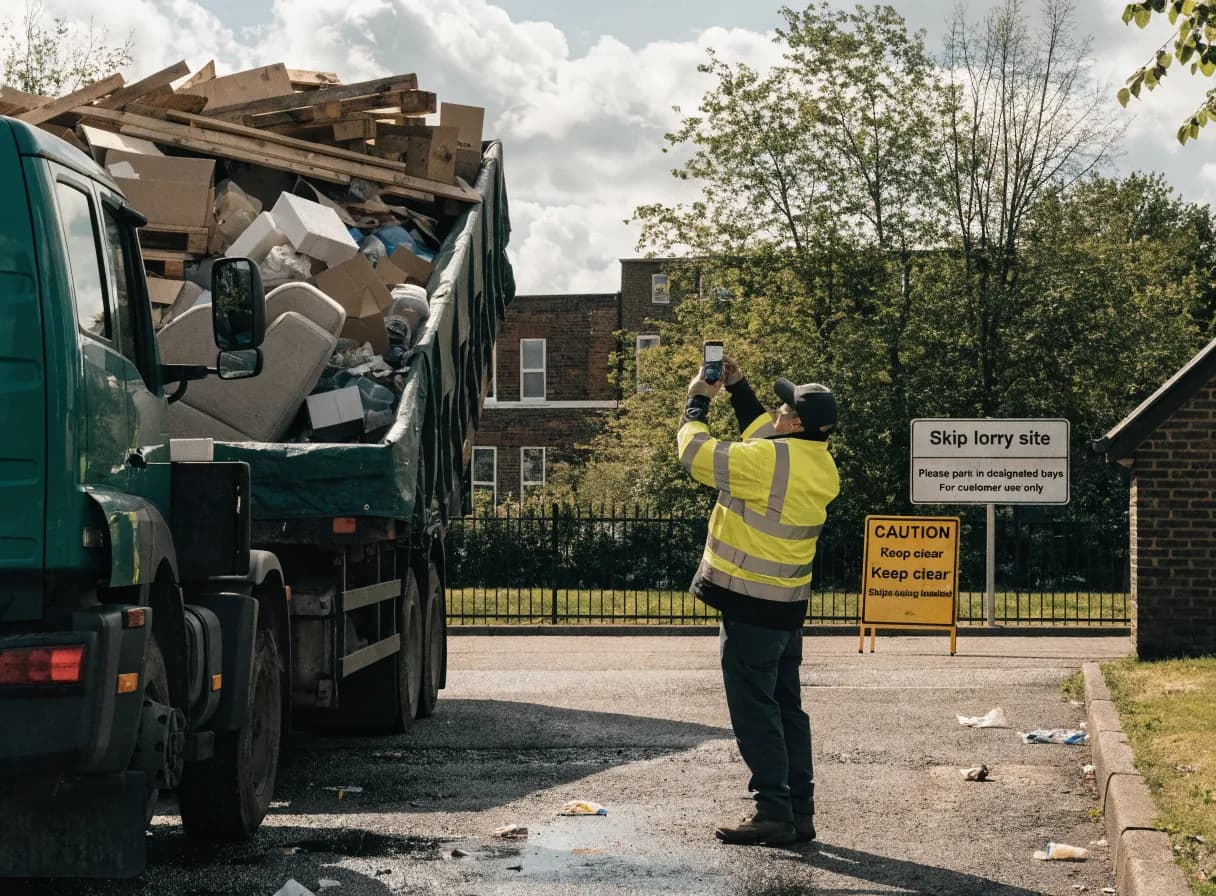
LoadSnap was trained on 1.2 million UK waste movements. Point a phone at a load and get back the right EWC code, a hazardous flag, and a consignee-return-ready description - typically inside half a second. Always shows its working.
How it works
Trained on the data UK regulators actually see.
Most generic vision models confuse a skip of mixed C&D for a metal scrap bin. Ours doesn't. Specialised, tuned, audited.
Detects document type
Photo of the waste, weighbridge ticket, paper WTN, weight slip - handled. Each routes a different way.
Flags hazardous waste
Routes HWCN automatically. Surfaces SDS where required. Won't let a driver submit a non-compliant load.
850+ EWC codes built in
19-series industrial, 17-series construction, 20-series municipal. Always returns to the codes DEFRA expects.
Confidence + alternatives
We never just pick one. You see the top match, runner-ups, confidences, and the visual cues we used.
Source-attributed
Every classification cites the EWC list entry, the H-code references, and the legal basis. Auditable end-to-end.
Edge cases routed to humans
Below 70% confidence and we kick it to our human review queue. Your driver never gets stuck waiting.
What one photo gives you
One photo fills the whole record.
The classifier is built around the record you actually have to complete, not a demo. Alongside the EWC codes it reads the container and the physical form straight off the photo, so the transfer-note fields fill themselves. Try it on your own photos with the free classifier tool - no account needed.
Up to five EWC codes per photo
A mixed skip rarely has one code. Codes come back ordered by visible proportion - most-of-the-skip first - so the duty-of-care record carries every stream.
Container and form pre-filled
Skip, RoRo, IBC, drum, tipper or loose, with the size where it's visible, plus the Solid / Liquid / Sludge determination.
POPs flagged before the tip
Upholstered seating and other likely Persistent Organic Pollutants are flagged at capture - so the sofa in the skip doesn't become a surprise at the gate.
Who stays responsible
It suggests. You decide.
No software can hold your duty of care: classifying waste correctly is legally the responsibility of the waste producer or holder. So LoadSnap is built to make your judgement fast, not to replace it. Every suggestion shows its confidence, its alternatives and the cues behind them, and nothing reaches a transfer note or DEFRA until a person has confirmed it.
You decide, in one tap
The top match and the runner-ups are side by side. Agree, or overrule - the record carries whichever a human confirmed.
Low confidence goes to people
Below 70% confidence the classification is kicked to a human review queue rather than waved through.
Nothing files itself by default
DEFRA auto-submission is opt-in and off by default. You review and press the button yourself until you decide otherwise.
See it work
One photo. Two seconds. Full classification.
Drop any of your existing load photos into our free classifier tool and we'll show you what we'd file - without you having to sign up.
Questions
AI classification, honestly answered.
01Can AI legally classify my waste?
02What happens when the AI is unsure?
03What can it read besides a photo of the waste?
04How does it handle hazardous waste?
05How fast is it really?
Digital waste tracking is live
The mandate is here.
Automate compliance.
Receiving sites in England and Wales have had to record every load digitally since 1 October 2026. Start a 14-day free trial in minutes, cancel any time before it ends, and file every load from day one.
DEFRA API integrated · EA carrier verification · UK data residency