’s WTNs and HWCNs,
without the carbon copies.
Domestic transfers are the everyday UK waste movement: a waste transfer note for non-hazardous loads, a consignment note for hazardous. LoadSnap generates both digitally, correctly, every time - and files the record with DEFRA.
Producer
Oakfield Joinery
Carrier
CBDU284913 ✓
EWC code
17 09 04
Net weight
2.46 t
Tracking ID
WT-2K9F-7T1A
The bread and butter
Every domestic movement, compliant.
Waste transfer notes
Compliant WTNs for non-hazardous loads, generated from the job in seconds.
Hazardous consignment notes
HWCNs for hazardous waste with the right codes, quantities, and consignee returns.
Season tickets
Annual transfer notes for regular collections of the same waste from the same place.
Digital signatures
Capture producer and carrier signatures on the glass; no paper copies.
Correct EWC codes
AI classification ensures the code and hazardous status are right at capture.
DEFRA submission
File the movement to the DEFRA API in two clicks.
The paperwork, defined
What a waste transfer note actually is.
A waste transfer note is the legal record of non-hazardous waste changing hands - the document behind the duty of care that follows every load from producer to final destination. Both parties fill in their sections, both sign, and both keep a copy for two years. Get one wrong, or fail to produce it for an inspector, and it's your problem regardless of whose van the waste left in.
A proper description
What the waste is, its six-digit EWC code, the quantity, and how it's contained.
Both parties, in full
Names, addresses and signatures of transferor and transferee, the capacity each is acting in, and the transferor's SIC code.
Time, place and authority
When and where the transfer happened, the carrier registration or permit number that makes it lawful, and a declaration that the waste hierarchy has been applied.
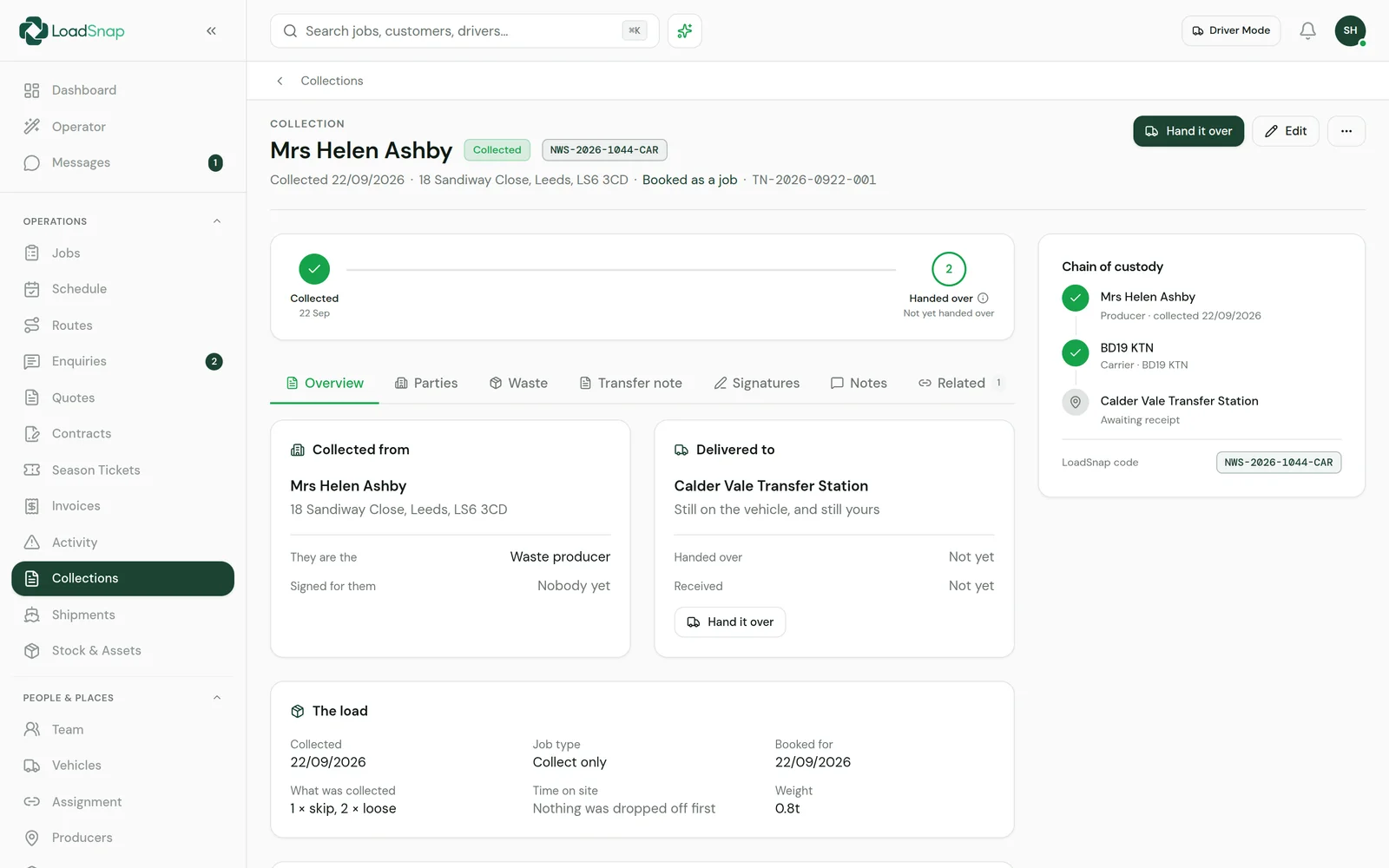
Two notes, one workflow
Hazardous or not, it's the same easy flow.
LoadSnap knows whether a load needs a transfer note or a consignment note from the classification - and produces the right document without you having to think about it.
Right document, automatically
Classification drives whether it's a WTN or HWCN.
Consignee returns
Hazardous movements get their returns generated at the receiver.
Season ticket support
Recurring same-waste collections covered by one annual note.
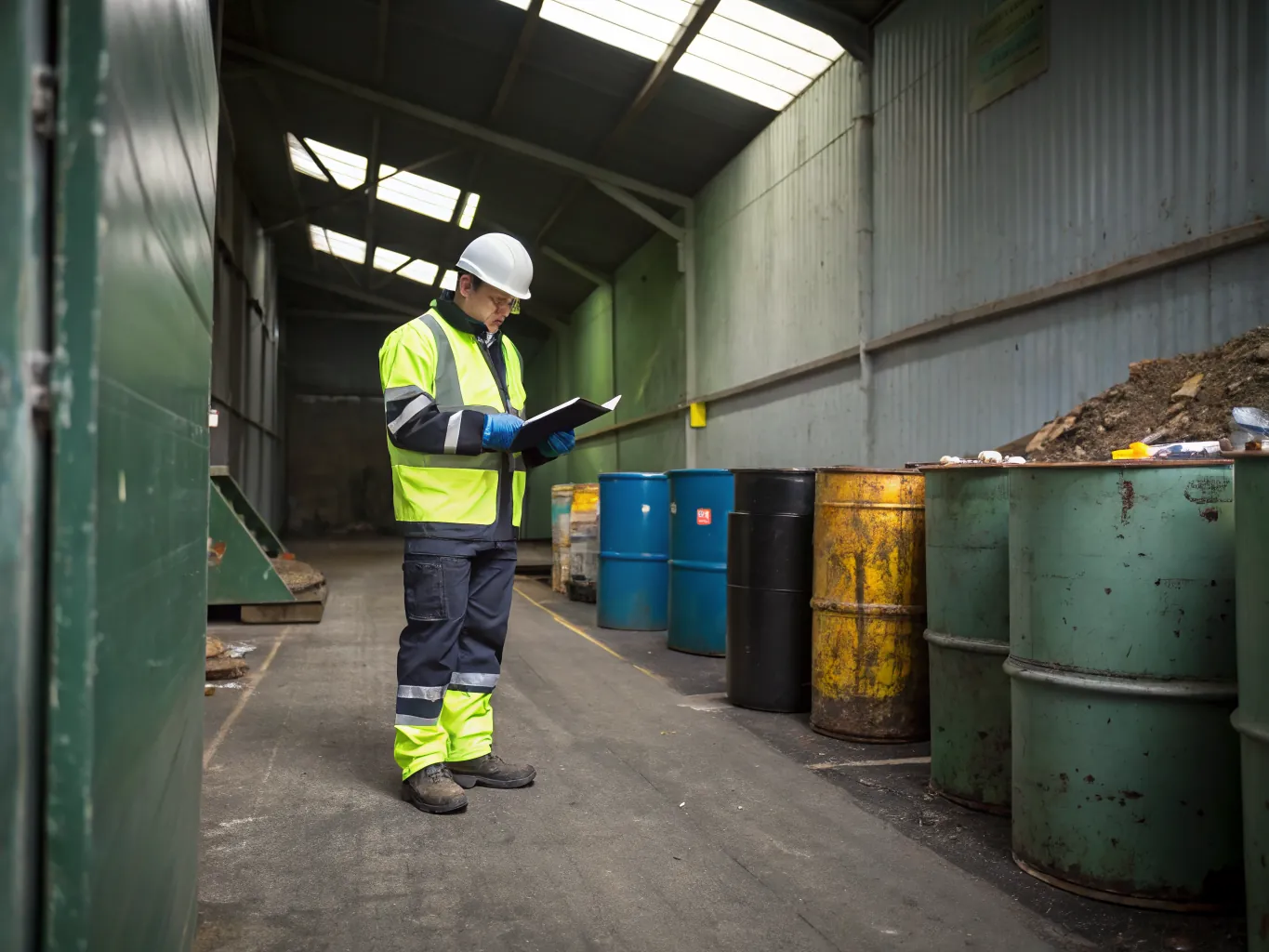
The rules are changing
From carbon pads to a national database.
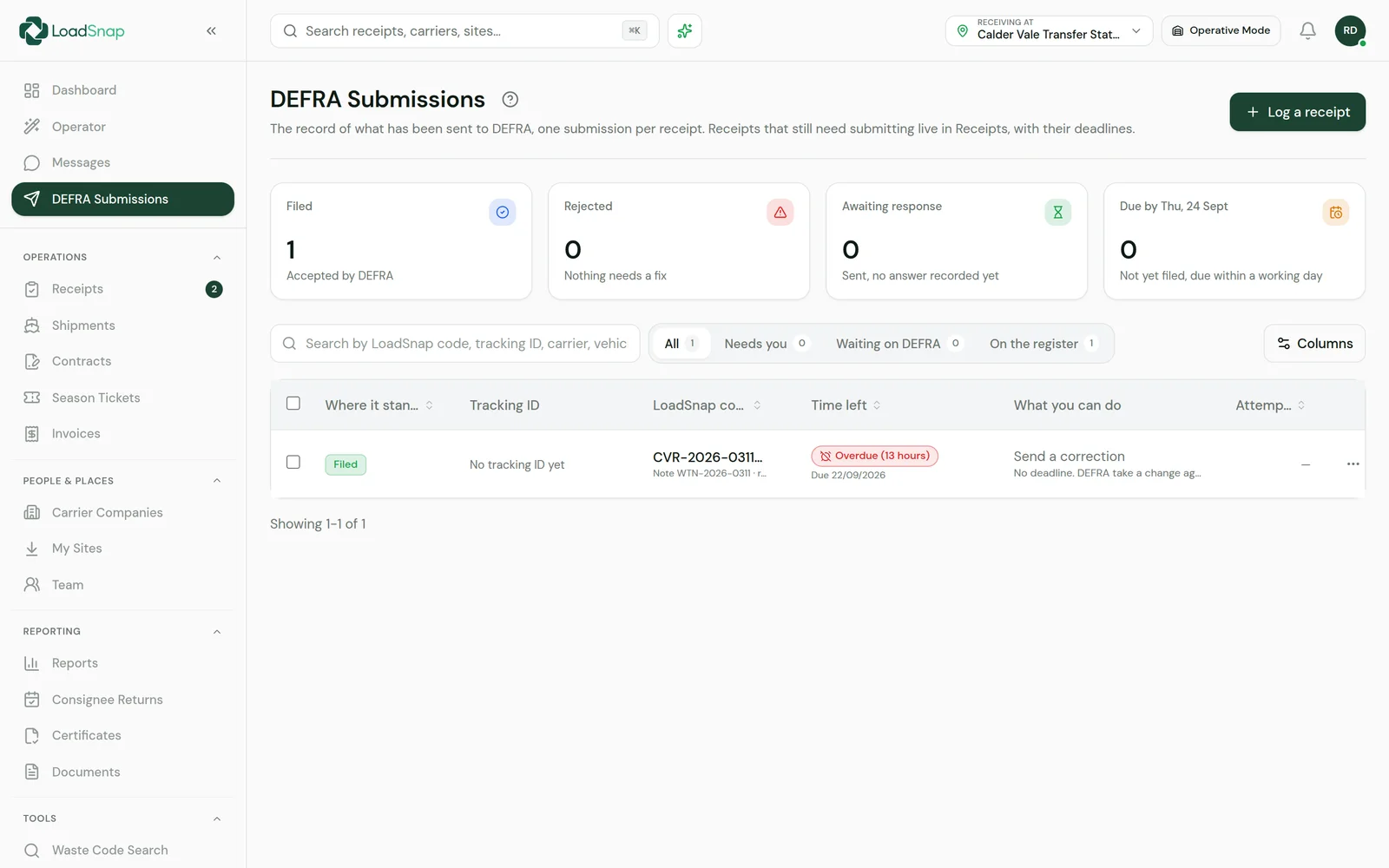
Mandatory digital waste tracking replaces the paper transfer note with records filed to DEFRA's central service. Receiving sites in England and Wales are mandated from 1 October 2026 - England's regulations, SI 2026/729, were made on 24 June 2026 - and Scotland and Northern Ireland follow from January 2027. Carriers and brokers come later, in a planned second phase from October 2027. Receipts have to be filed within 2 working days - a deadline a drawer of carbon copies can't meet.
Same duty, new format
The duty of care doesn't change; how you evidence it does.
Filed for you
LoadSnap generates the note and files the DEFRA record from the same capture - no second system.
Ready either way
Until your nation's date arrives, you still get compliant digital WTNs with none of the paper.
Questions
Good to know.
01What is a waste transfer note?
02What are the waste transfer note requirements?
03What's the difference between a WTN and an HWCN?
04What's a season ticket?
05Do waste transfer notes change under digital waste tracking?
Digital waste tracking is live
The mandate is here.
Automate compliance.
Receiving sites in England and Wales have had to record every load digitally since 1 October 2026. Start a 14-day free trial in minutes, cancel any time before it ends, and file every load from day one.
DEFRA API integrated · EA carrier verification · UK data residency