Do you need to report the waste you receive? DEFRA's guidance, read from the weighbridge
DEFRA's guidance on who has to report received waste, who is let off, what each record needs, the deadlines, the outage rules and the charge for running more than one company. Read line by line, with what it means for your site.

LoadSnap team
UK waste compliance
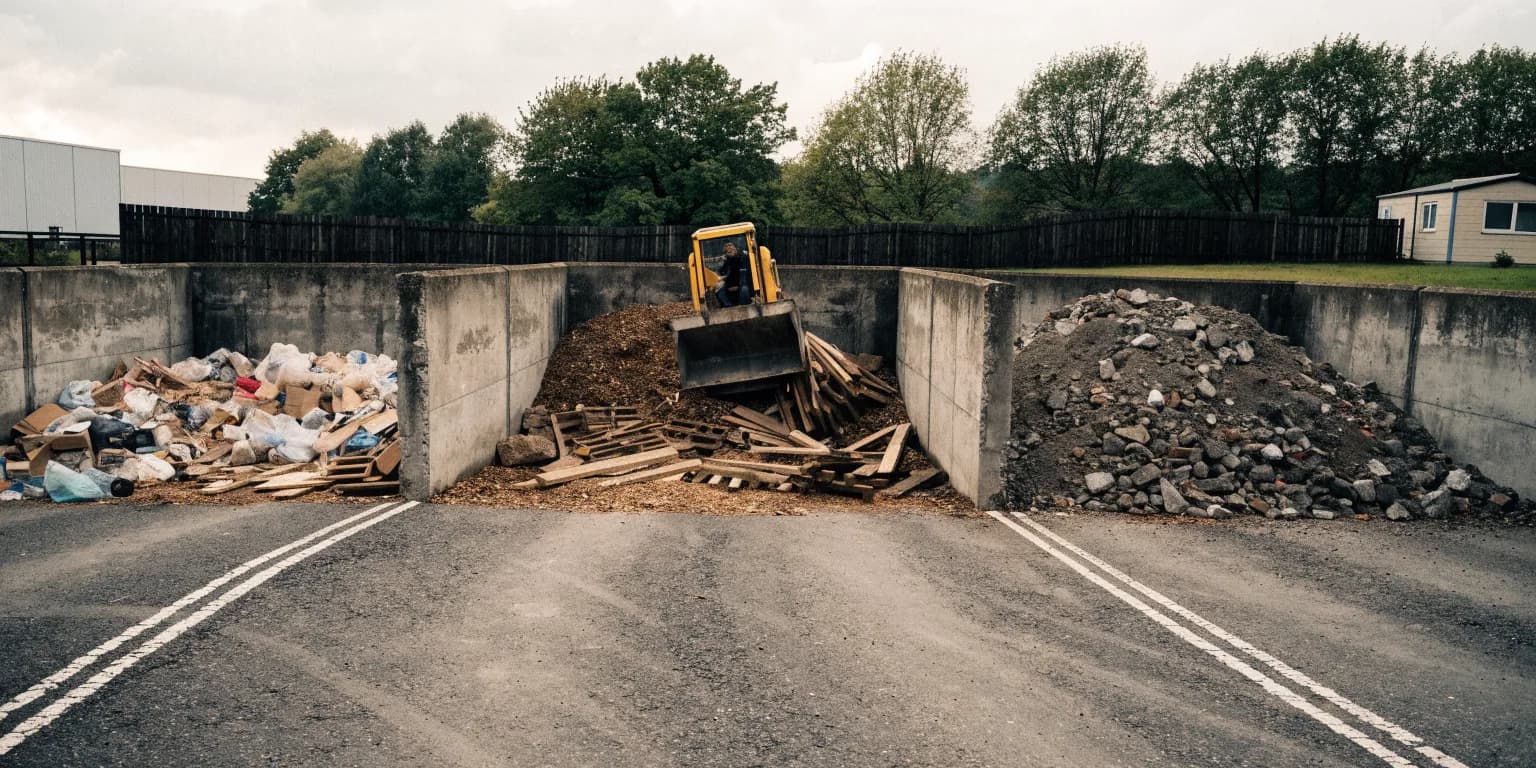
DEFRA and the Welsh Government have published one page that answers the question every site manager has been asking since the summer: do I actually have to report the waste I take in? For most permitted sites the answer is yes, and it has been yes since 1 October 2026. Here is the guidance read line by line, with what it means at the gate.
- Who
- Permitted or licensed sites in England and Wales that receive controlled waste
- From
- 1 October 2026
- Deadline
- Each load within 2 working days, starting the day after it arrived
- Cost
- £26 a year for each organisation, covering all of its sites. First payment due by 31 January 2027
- Where
- DEFRA's Report receipt of waste service, through software or DEFRA's spreadsheet
Who has to report
If you operate a site with an environmental permit or a waste licence and it receives controlled waste, you report every load you receive. That covers permitted operations, installations and mobile plant, and it includes waste that is produced on the same site where it is received. The duty comes from the Digital Waste Tracking (England) Regulations 2026 and the Digital Waste Tracking (Wales) Regulations 2026, so it is law rather than good practice.
Controlled waste is the wide category. Most household, commercial and industrial waste counts. If you are not sure whether what comes over your weighbridge is controlled waste, assume it is and check with your regulator.
Carriers are not in this yet
This page is about the site that takes waste in. If you only collect and move waste, your own reporting duty comes later. If you collect and also run a permitted site, the site half of your business has been reporting since 1 October.
Who does not have to report
The list of exceptions is short, and narrower than people hoped:
- Household waste recycling centres. In England, you do not report household waste brought in by residents. In Wales, operators of household waste recycling centres do not use the service.
- Digitally excluded operators. This is only where using digital tools is not reasonably practical because of age, disability or where you are, or where the business is run entirely by members of a religious society whose beliefs rule out electronic records. You need a digitally excluded number from your regulator, and you keep a written record of every load instead.
The guidance is blunt about what does not count as being digitally excluded: preferring paper, not knowing the software, or the cost and time it takes. If the only reason is that the yard has always done it on paper, you are not excluded.
Running more than one company
Plenty of waste businesses are a group: a skip hire company and a separate transfer station company, or a partnership alongside a limited company. DEFRA's Report receipt of waste guidance lets you add each organisation that receives waste to the same Defra account. Each one has to be registered separately first, and each one gets its own API code.
The charge follows the organisation, not the account and not the site. It is £26 a year for each organisation on your account, and that covers every receiving site the organisation has. So a group with two receiving companies pays £52 a year, however many sites each company runs. The first payment is due by 31 January 2027, and an organisation registered part way through the year still pays the full amount. The charge is paid to DEFRA by the organisation itself, whichever software it uses.
How LoadSnap handles a group
In LoadSnap the DEFRA code is saved against each site, in Settings, DEFRA. If one company runs two sites and the other runs one, you paste the first company's code on its two sites and the second company's code on its own site, then press Test Connection on each row. Every receipt is filed under the code of the site that received it, so a load that came into the second company's yard is never reported as the first company's.
What each record has to include
Each load you report needs:
- Details of the movement, the carrier and you as the receiver.
- The waste classification code (the EWC code) for what was received.
- The recovery or disposal code for what will happen to it.
- For waste containing persistent organic pollutants (POPs) on the listed substances, the substance name and its concentration, or a reason you do not have them.
- For hazardous waste, the hazardous property (HP) codes, the components and their concentrations, or a reason you do not have them.
The last two are where sites get stuck, because the information has to come from whoever produced the waste. If you take in hazardous waste or anything likely to contain POPs, such as upholstered furniture, ask your customers for the details when the job is booked, not at the gate.
Hazardous loads covered by more than one consignment note are reported as separate entries, one for each note.
The deadlines
| What | Deadline |
|---|---|
| A load you received | Within 2 working days, starting the day after it arrived. Weekends and bank holidays do not count |
| An error DEFRA or your software tells you about | Within the same 2 working days |
| An error you find yourself | As soon as possible, and within 1 month of finding it |
| Waste piped in over more than one day | 2 working days from the day after the last of it arrived |
| Waste piped in continuously | 2 working days from the day after the earlier of the quarter end on the note or the day the piping stops |
In LoadSnap every receipt that has not been filed shows when its two working days run out, with UK bank holidays already taken out of the count. If a filing does not go through, LoadSnap checks every 15 minutes for receipts that are ready but not filed, and files them. It never files the same load twice, because a movement cannot be taken back out of DEFRA's system once it is in.
Paperwork that carries on
Reporting to DEFRA does not replace any of these, so keep doing them:
- Waste transfer notes, hazardous waste consignment notes and Annex VII forms, where you need them.
- Waste returns your permit asks for.
- Hazardous waste consignee returns, and the charges that go with them.
LoadSnap makes the transfer note and the consignment note from the same receipt that goes to DEFRA, so the details only have to be entered once.
When DEFRA's service is down
Outages are going to happen, and the guidance sets out what you do:
- 01Tell your regulator as soon as you can, unless the outage is on DEFRA's side and you have already been told about it.
- 02Keep a written record of each load within 2 working days, starting the day after it arrived.
- 03Enter those loads into the service within 7 working days after it is working again.
- 04Give your regulator the written record if they ask for it.
If DEFRA cannot take a filing, the receipt stays in LoadSnap as received but not filed, with everything captured at the gate. LoadSnap tries again on its own, waiting longer after each failed try, and after five failures it leaves the receipt for someone in the office to send once DEFRA is back. Telling your regulator is still your job.
If you get it wrong
Missing a deadline, not correcting an error, not keeping written records and entering wrong information are all offences. The regulator can issue a compliance notice, a fixed penalty of £1,000, a variable penalty with no upper limit or an enforcement cost recovery notice, or prosecute, with an unlimited fine on conviction. Knowingly giving false or misleading information can mean up to 2 years in prison.
You have 28 days to object to a notice of intention to issue a monetary penalty, and 2 months to appeal a decision to the First-tier Tribunal. Convictions and civil sanctions go on a public register.
Where to get help
- Problems with the service itself: DEFRA's helpdesk on 03000 203 781, Monday to Friday, 8am to 5pm.
- Whether you have to report, or how: your regulator. That is the Environment Agency in England and Natural Resources Wales in Wales.
If you have not registered yet, start with getting your DEFRA code. If you want to report without paying for software, there are two free ways. And what LoadSnap sends to DEFRA on your behalf is on the DEFRA integration page.
LoadSnap team
UK waste compliance
Written by the team building LoadSnap, the UK waste compliance platform for carriers and receivers.
Digital waste tracking is live
The mandate is here.
Automate compliance.
Receiving sites in England and Wales have had to record every load digitally since 1 October 2026. Start a 14-day free trial in minutes, cancel any time before it ends, and file every load from day one.
DEFRA API integrated · EA carrier verification · UK data residency