Operative mode: locking the tablet down to one job (and why)
Why the fastest weighbridge UI we could build is also the most locked-down — and what operatives deliberately can't do from the gate screen.

LoadSnap team
UK waste compliance
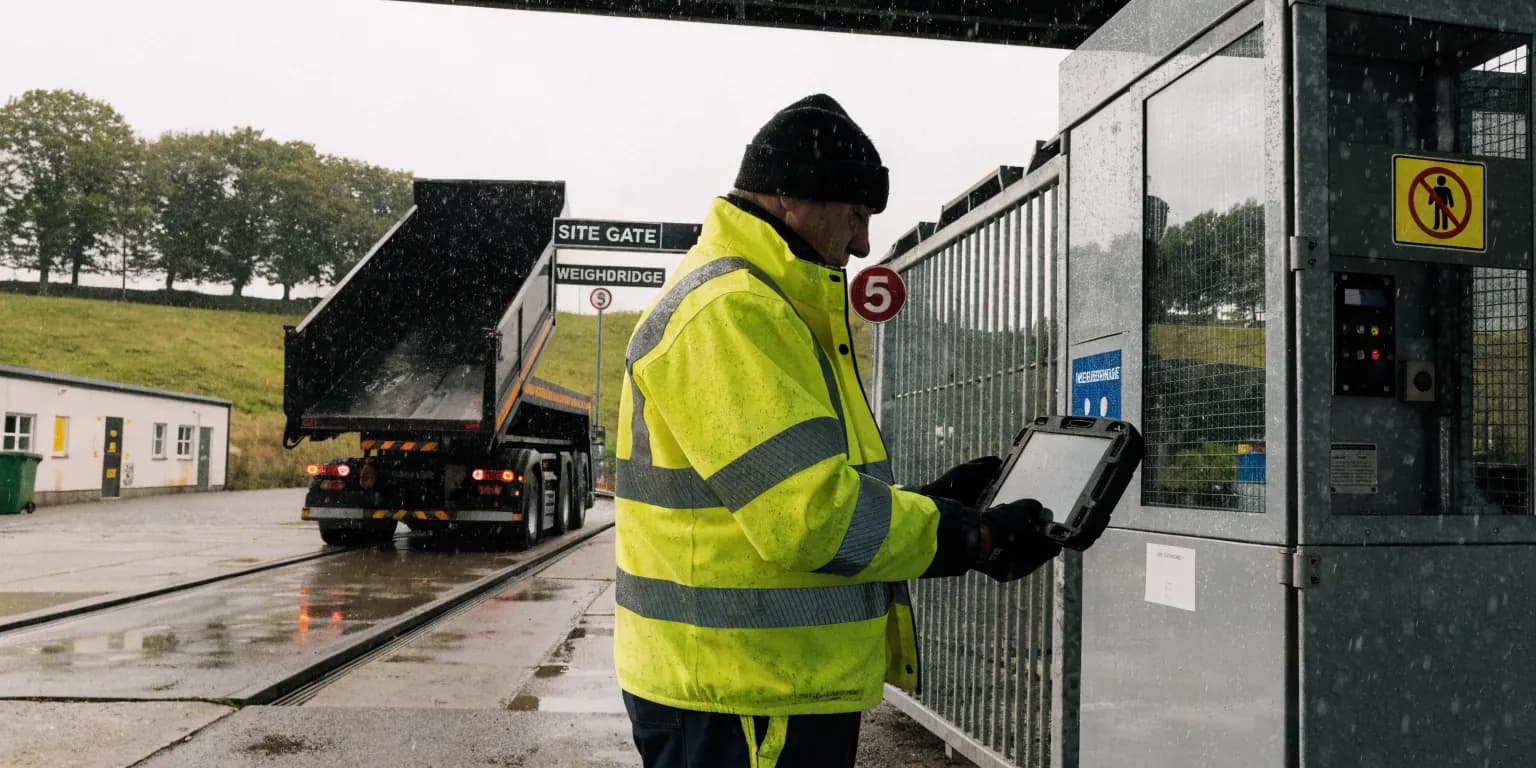
The most common piece of feedback on the operative portal is that it doesn't do very much. One job on screen. A handful of buttons. No menus to speak of. This is accurate, and it's the most deliberate design decision in the product.
Operative mode is the full-screen tablet mode a receiving site runs at the gate — the screen a weighbridge operative uses to log arriving loads. Here's the thinking behind locking it down.
A weighbridge is a terrible place for an interface
Everything about the environment argues against subtlety. The screen is outdoors or next to a door, in full daylight, often wet. The operative is probably wearing gloves. There's a lorry on the bridge, two more behind it, and a driver in the cab watching the operative work. Every design decision follows from that: big targets, high contrast, one decision per screen, and a flow that finishes in under a minute.
What operatives can't do
The more honest way to describe operative mode is by what it leaves out. From the gate screen an operative can't:
- Wander into settings, pricing or the admin back office
- Open a different job from the one in front of them — the kiosk lock holds the tablet to a single job at a time
- Get lost in a dashboard, an inbox or a menu tree, because there isn't one
- Skip the parts that matter — the weight, the classification and the acceptance decision are the whole flow
None of this is about trusting people less. It's about the shape of the errors. On a busy gate the expensive mistake isn't malice; it's a perfectly competent operative putting the right data on the wrong record while three other things happen at once. A screen that can only show one job can't take data for the wrong one.
Fewer choices, smaller errors
Each step in the flow asks one question. The AI pre-fills the EWC code and the operative confirms or corrects it in a tap. Acceptance defaults to yes; marking a load as partially accepted or rejected opens a reason field, so the exception is recorded at the moment it happens instead of being reconstructed later. And the weight is the operative reading the bridge and keying gross and tare — LoadSnap works out the net. There's no weighbridge hardware integration, by design: the number the operative can see on the bridge is the number that gets filed.
Locked down, not locked out
Two things stop this being a cage. First, the lock is a mode, not a hierarchy: an admin covering the gate can switch into operative mode from the main portal in one tap, and back out again when the queue clears. Second, the compliance work happens as a by-product. The receipt files to DEFRA, and the consignee return builds itself from the loads the site accepted. The operative never “does compliance” — they log the load in front of them, and the record takes care of itself.
“Every feature we leave out of operative mode is a mistake an operative can't make at the gate.”
- The LoadSnap team
The full gate flow is on the operative portal page, and the wider receiver picture — returns, permit limits, the DEFRA connection — is on solutions for receivers. If you like reading about things we deliberately didn't build, the auto-submit post is the same philosophy applied to filing.
LoadSnap team
UK waste compliance
Written by the team building LoadSnap, the UK waste compliance platform for carriers and receivers.
Keep reading

“DEFRA Approved” Waste Tracking Software: What the Term Actually Means (and Who's Really on the List)
Jul 7, 2026 · 7 min
How to get your DEFRA Digital Waste Tracking code
Jun 26, 2026 · 5 min
Ask your waste data a question — with Copilot and the Claude connector
Jun 26, 2026 · 4 min
On the DEFRA DWT Beta
The mandate is coming.
Get compliant now.
Start for free. Live in under an hour. No credit card. Build your digital audit trail today, before the deadline forces it.
DEFRA API integrated · EA carrier verification · UK data residency