Annex VII walkthrough - what international transfers look like under the new regime
Green list exports don't need EA consent — they need an Annex VII form, done properly. Who fills in each block, who signs it, and how long you keep it.

LoadSnap team
UK waste compliance
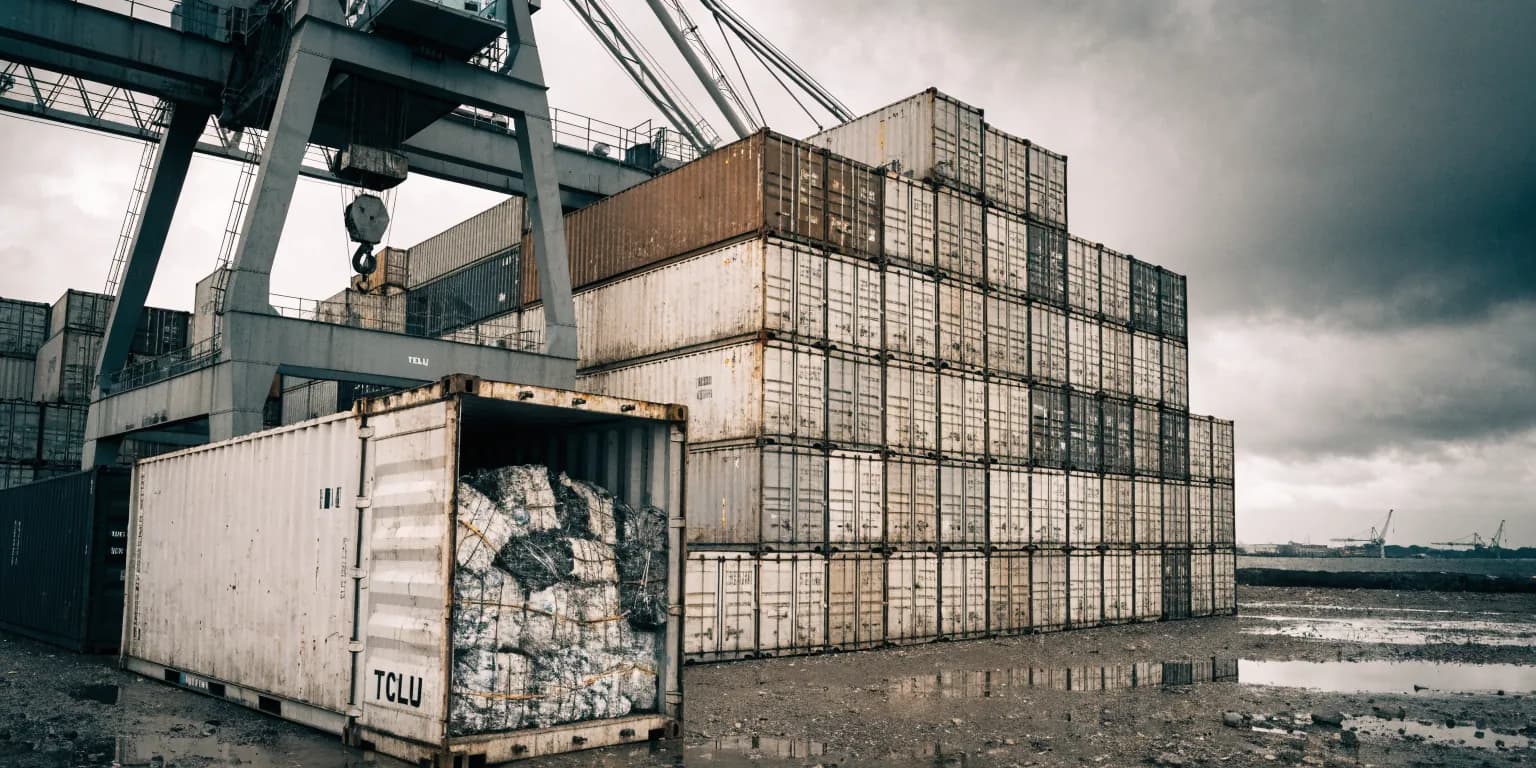
Most of the digital waste tracking conversation is about movements inside the UK. But if you export — baled card to a European mill, scrap metal to a smelter — the paperwork lives under a different regime: the Waste Shipment Regulation. For most non-hazardous exports, it comes down to one document. The Annex VII form.
It's a single page. No fee, no approval step, and nobody checks it before your container moves. Which is exactly why it gets filled in badly.
What Annex VII actually is
The form comes from the Waste Shipment Regulation — Regulation (EC) 1013/2006, retained in UK law after Brexit. Article 18 says that “green list” waste — broadly, non-hazardous waste heading for recovery, listed in Annex III, IIIA or IIIB of the regulation — can cross borders without prior consent, provided a specific set of information travels with it. The Annex VII form is that information.
Two things follow. You do not need to notify the Environment Agency, wait for consent or pay a fee for a green list shipment — the gov.uk guidance is explicit about that. And the threshold is low: the requirement bites on any shipment over 20 kg.
Annex VII or full notification?
Annex VII only covers the green list. Everything else moves under the notification procedure — prior written consent from the authorities in every country the waste touches, which takes weeks and costs real money. Annex VII is not an option for:
- Hazardous waste, in any quantity
- Waste with no Basel or OECD code — if you can't find one, the guidance says to treat the waste as “not listed”, and notification controls apply
- Mixtures that don't match an entry in Annex IIIA
- Green list waste contaminated beyond a minimal level — contamination tips it into notification territory
- Anything destined for disposal rather than recovery
One more check: the destination. Non-OECD countries set their own import conditions — some prohibit green list wastes outright or require notification anyway. Check the country-specific rules before the deal is done, not when the container is on the quay.
The form, block by block
The form has 14 blocks. Here's who owns what.
- 01Block 1 — the person who arranges the shipment. The exporter of record: if you organised the movement, that's you.
- 02Block 2 — the importer or consignee taking the waste at the other end.
- 03Blocks 3 and 4 — the actual quantity in kilograms or litres, and the actual date of shipment. Actual, not estimated — this is the one people fill in too early.
- 04Block 5(a) to (c) — up to three carriers, each with means of transport, transfer date and a signature. Every carrier who touches the load signs.
- 05Block 6 — the waste generator: the original producer, new producer or collector.
- 06Block 7 — the recovery facility that will actually process the waste.
- 07Block 8 — the recovery operation as an R code: R3 for plastics, R4 for metals, and so on.
- 08Blocks 9 and 10 — the usual description of the waste and its identification codes: Basel Annex IX, OECD where different, and the List of Wastes (EWC) code. All of them must describe the same material.
- 09Block 11 — the countries concerned: dispatch, any transit, destination.
- 10Block 12 — the declaration, signed by the person in Block 1.
- 11Blocks 13 and 14 — signed on receipt by the importer and, if different, by the recovery facility. This is your proof the loop closed.
The contract nobody reads
Article 18 also requires a written contract between the person arranging the shipment and the consignee, effective when the shipment starts. It must oblige the exporter to take the waste back — or arrange recovery another way — if the shipment can't be completed or turns out to be illegal. No contract, no lawful shipment, however tidy the form.
Who keeps it, and for how long
A copy of the signed form travels with the waste at all times — driver, forwarder, shipping line. Exporters and importers must then keep copies of the form and the contract for three years, and the competent authorities can ask to see them at any time. If Block 14 never comes back signed, you don't have a complete record. Chase it.
The mistakes we see most
- Quantities copied from the sales contract instead of the weighbridge — Block 3 wants the real figure
- Basel, OECD and EWC codes that don't agree with each other, or with what's actually in the container
- Missing carrier signatures in Block 5, usually because a subcontracted haulier never saw the form
- No signed Block 14 on file — the shipment left, the evidence never came home
- Relying on Annex VII for a non-OECD destination that actually demands notification
Where LoadSnap fits
The UK's digital waste tracking service covers movements within the UK — it doesn't replace Annex VII, so exporters will run both. LoadSnap's international transfers workflow builds the Annex VII document from the job record you already keep, and stores the signed copies against the movement alongside the domestic records our DEFRA integration handles. One record, both regimes.
If you ship green list waste, download the official form from gov.uk and walk your last shipment through the fourteen blocks. Every block you couldn't complete from your own records is the gap to close before a regulator asks the same question.
LoadSnap team
UK waste compliance
Written by the team building LoadSnap, the UK waste compliance platform for carriers and receivers.
Keep reading

“DEFRA Approved” Waste Tracking Software: What the Term Actually Means (and Who's Really on the List)
Jul 7, 2026 · 7 min

How to get your DEFRA Digital Waste Tracking code
Jun 26, 2026 · 5 min
Ask your waste data a question — with Copilot and the Claude connector
Jun 26, 2026 · 4 min
On the DEFRA DWT Beta
The mandate is coming.
Get compliant now.
Start for free. Live in under an hour. No credit card. Build your digital audit trail today, before the deadline forces it.
DEFRA API integrated · EA carrier verification · UK data residency